
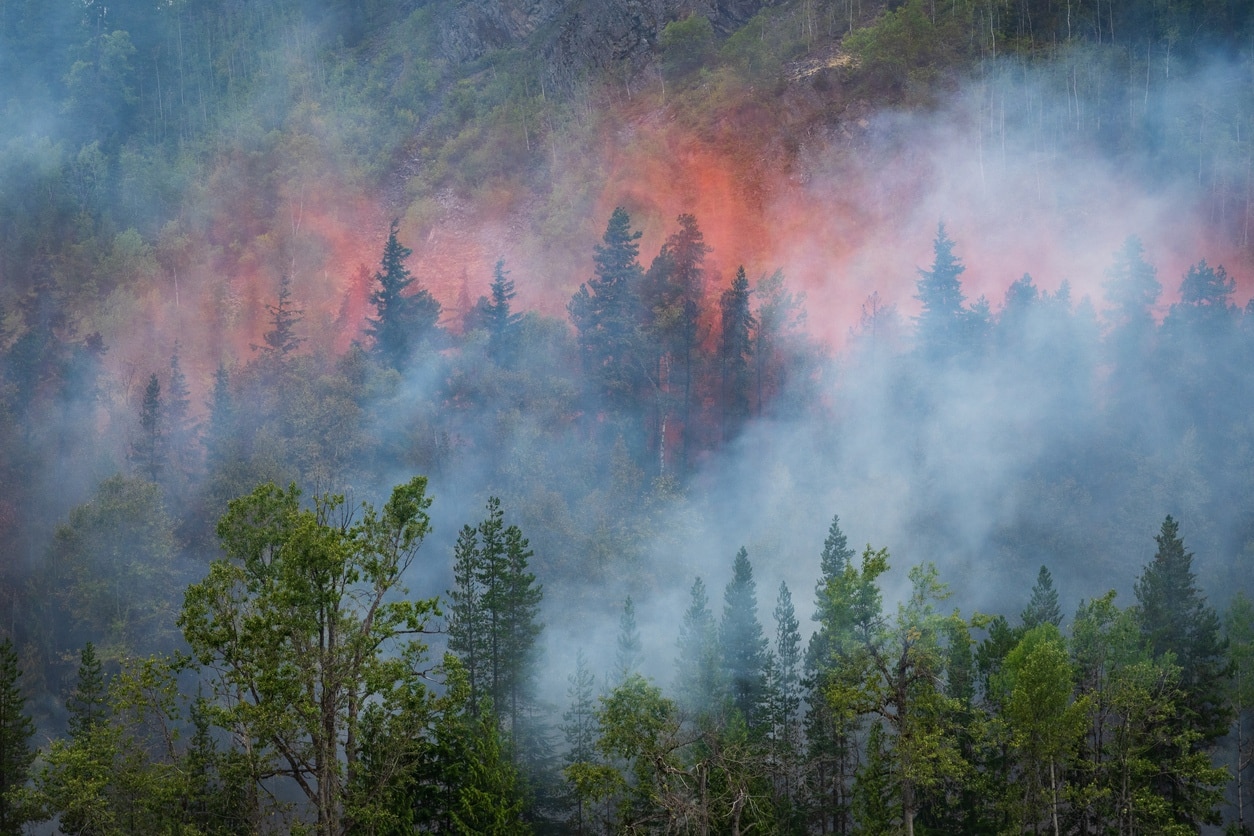
Why Post-Construction & Fire Damage Cleanup Matters After California Wildfires
For homeowners and businesses in Pacific Palisades, Altadena, and nearby Los Angeles communities, rebuilding after a wildfire means more than replacing damaged structures. It means getting families back home and businesses ready to reopen.
Once construction ends, professional fire damage cleanup and post-construction detail cleaning may both play a role, depending on the property’s condition.
The Wildfires Behind Southern California’s Rebuilding Effort
Two major fires began on January 7, 2025. The Eaton Fire burned 14,021 acres and destroyed 9,419 structures in and around Altadena and Pasadena. The Palisades Fire burned 23,448 acres and destroyed 6,845 structures, devastating Pacific Palisades and affecting nearby coastal communities.
These numbers reflect more than property losses. Each damaged home, storefront, and office can mean months or years of planning and rebuilding.
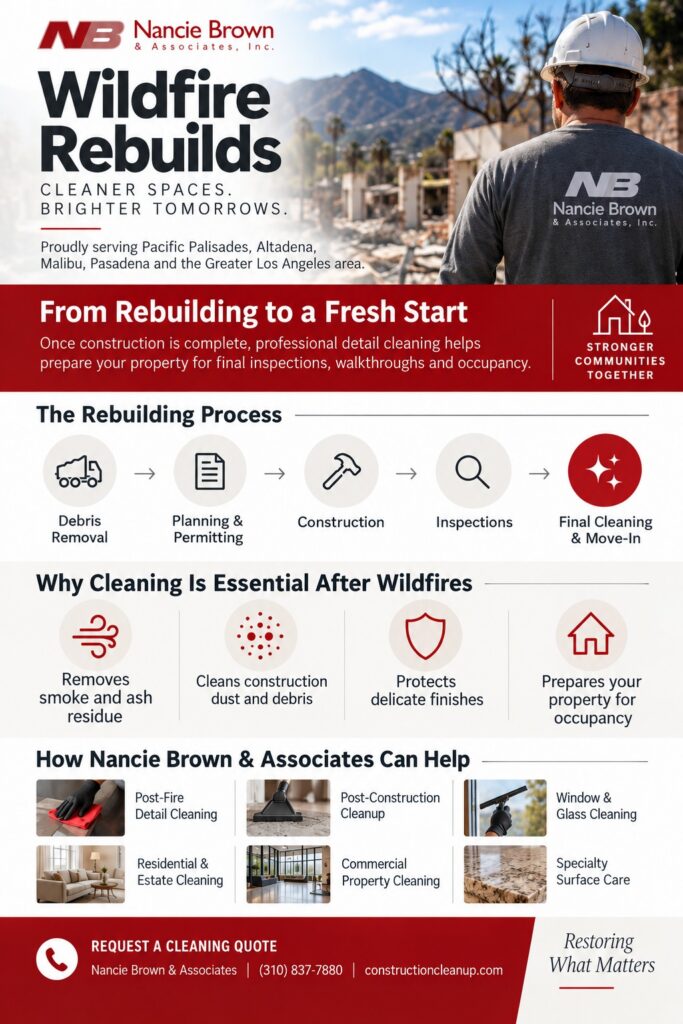
From Reconstruction to the Final Cleaning
Rebuilding after a wildfire takes time, with several important steps before homeowners and businesses can return to their properties. The Los Angeles County Road to Rebuilding guide outlines the process, from debris removal and permitting to construction, inspections, and moving in. Progress is already underway.
Before a rebuilt property is handed over, however, contractors still have drywall dust, sawdust, paint residue, and fingerprints to address. Luckily, our available post-construction cleaning services are designed to prepare newly installed floors, cabinetry, fixtures, and windows for walkthroughs and occupancy.
If you need assistance cleaning your property in the aftermath of a wildfire, view our helpful post-construction cleaning checklist. Our guide will help you take precautionary next steps before our cleaning specialists arrive at your home or commercial property.
To receive assistance cleaning your house or property after a fire, give our team a call at (310) 837-7880. We are committed to helping you remove dust, debris, and contaminants from your home or commercial space.
Why Construction Dust and Smoke Damage Need Different Approaches
Ordinary construction residue is not the same as soot or wildfire ash. Smoke can enter buildings beyond a burn perimeter, while ash from burned structures may contain hazardous materials. The EPA’s wildfire indoor air guidance explains the risks of fine smoke particles indoors.
Some rebuilt properties need only routine detail cleaning. Others, especially partially damaged buildings, may require an environmental assessment or specialized remediation before smoke damage cleanup is appropriate. Cleaning alone cannot establish that a property is safe for occupancy.
How Our Professionals Can Help with Fire Damage
Our qualified team can help property managers in a variety of ways after a fire. Below are examples of the ways we can support you:
- Post-Fire Detail Cleaning: Provide selective interior and exterior cleaning for properties affected by light smoke contamination, soot, ash buildup, and post-fire dust.
- Post-Construction Cleanup: Remove drywall dust, sawdust, paint residue, and other construction debris after fire-damaged homes and commercial properties have been rebuilt or renovated.
- Window and Glass Cleaning: Clean interior and exterior windows, skylights, sliding glass doors, and architectural glass affected by suitable surface residue and construction dust.
- Residential and Estate Cleaning: Detail floors, countertops, cabinetry, bathrooms, and other interior surfaces in homes and luxury estates following repairs or reconstruction.
- Commercial Property Cleaning: Help offices, retail spaces, and other commercial buildings prepare for reopening following fire-related repairs or rebuilding projects.
- Specialty Surface Care: Use cleaning methods appropriate for delicate materials such as natural stone, hardwood flooring, custom cabinetry, and architectural finishes.
- Final Cleaning Before Occupancy: Work alongside contractors and property managers to prepare reconstructed buildings for final walkthroughs, inspections, and handover.
All post-fire cleaning requests are evaluated individually to determine whether the property’s condition is appropriate for Nancie Brown & Associates’ services. Hazardous-material remediation and structural fire restoration are outside the scope of routine detail cleaning.
The Chemical Hazard of Wildfire Residue
Unlike organic wood ash, structural wildfire smoke contains burned synthetic materials, insulation, treated lumber, paints, plastics, and household chemicals. According to the EPA, wildfire smoke contains hazardous fine particulate matter, particles 2.5 microns in diameter or smaller that penetrate deep into homes or commercial buildings.
Furthermore, dry-sweeping or improperly wiping these materials creates severe secondary hazards:
Ash is highly alkaline. When exposed to moisture, it forms a corrosive paste that etches glass, tarnishes custom metals, and strips delicate wood finishes.
Airborne soot embeds into porous stone (limestone, travertine, unsealed marble), grout lines, and fresh paint if wiped with standard household chemicals.
Particulate settles inside HVAC returns and ductwork. It is repeatedly circulated back into living spaces once systems are powered on.
How to Clean Smoke Damage Without Creating New Problems
People searching how to clean smoke damage should first understand what residue is present and what surfaces are affected. Dry sweeping can stir up ash, and ordinary household or shop vacuums can release particles back into the air. The EPA’s wildfire ash cleanup guidance discusses safer approaches and the use of appropriate HEPA equipment.
Glass, natural stone, finished wood, and specialty metals also require material-specific care. Before cleaning, confirm that the site is cleared for the proposed work, determine whether hazardous contamination is suspected, and select qualified professionals for the job. Materials such as asbestos or lead may require specialized handling. Our fire damage cleanup tips explain additional considerations for high-value properties.
Choosing a Fire Damage Cleaning Company in Los Angeles
When hiring a fire damage cleaning company, ask about experience with construction sites, delicate finishes, insurance, applicable licensing, and on-site supervision. Just as importantly, make sure the proposed work matches the property’s actual needs.
Serving Southern California since 1987, Nancie Brown & Associates provides post-construction, residential, commercial, and selective fire damage cleaning services. Our post-fire and smoke detail cleaning services are evaluated case by case, particularly when light smoke contamination, ash, or post-fire dust is involved. We coordinate with contractors and property owners to help protect newly installed finishes during the final cleaning stage.
For those seeking fire damage cleaning services in Los Angeles and the surrounding areas, including Pacific Palisades, Altadena, Pasadena, and Malibu, the first step is to discuss the property’s condition and the right scope of work.
Prepare Your Property for Its Next Chapter
After months of rebuilding, the final cleaning is one step toward welcoming people back. Whether you’re finishing a home or preparing a business to reopen, request a cleaning quote from Nancie Brown & Associates or call (310) 837-7880 to discuss your project.
Professional Post Fire Damage Cleanup Services
Since 1987, Nancie Brown & Associates has been providing reliable post fire damage cleanup services across Southern California. Contact our team to request a quote.